A Complete Guide to Range Hood Depth for Small Kitchens: Sizing, Types & Sourcing Tips for Global Buyers
Meta Description (Google SEO compliant):
Learn how small kitchen vent hood depth impacts smoke capture, kitchen layout and user experience. Compare ductless, euro, 600mm, quiet and wall-mounted cooker hood dimensions, plus reliable OEM/ODM range hood supplier DE&E for overseas bulk procurement.
1. Introduction
For global kitchen appliance distributors, hardware retailers, hotel fit-out contractors and cross-border e-commerce merchants, small-sized range hoods remain a top-selling kitchen appliance category, driven by booming demand for compact apartments, micro-kitchens, rental housing and minimalist residential renovation worldwide. Among all technical specifications that determine product performance and market adaptability, the depth of a vent hood is often overlooked yet carries decisive weight in both functional efficiency and spatial compatibility.
Many overseas buyers repeatedly consult manufacturers about standard depth ranges for small cooker hoods, as improper sizing leads to two core customer complaints: insufficient smoke extraction efficiency or intrusive protrusion that blocks kitchen workflow. This industry guide systematically breaks down the practical logic of vent hood depth, classifies standard depth specs for mainstream small hood models, lists critical pre-purchase evaluation factors, and introduces a premium factory partner DE&E Appliances for reliable bulk order cooperation. This content aligns with international kitchen ventilation industry standards and real end-user application scenarios, fully optimized for Google search crawling with high-value commercial keywords for kitchen appliance importers.
2. Why Range Hood Depth Is a Non-Negotiable Specification
The depth dimension of a small kitchen vent hood refers to the front-to-back measurement from the wall mounting surface to the outermost edge of the hood canopy, balancing two core value propositions: functional performance and spatial aesthetics
2.1 Functional Performance Impacts
The primary mission of any range hood is capturing cooking smoke, steam, grease particles and food odors before they disperse across the kitchen. Depth directly defines the capture zone area above the stovetop:
Shallow-depth hoods (below 18 inches) feature narrow canopy coverage. When users conduct high-heat stir-frying, boiling or grilling, rising fumes easily escape sideways before being drawn into the filter, leaving residual grease on cabinets, walls and furniture while compromising indoor air quality.
Moderate to deep hoods (20–24 inches) form a wider negative pressure capture area. The extended depth creates an enclosed air cavity that traps fumes at the source, drastically reducing grease accumulation and cutting down post-cooking cleaning workloads. For frequent home cooks or commercial compact kitchenettes, deeper units deliver consistent ventilation performance.
Beyond smoke capture, hood depth also correlates with airflow and noise control. Deeper internal housing accommodates larger blower motors and optimized air duct structures, minimizing turbulent airflow and lowering operational decibel levels-an essential selling point for residential consumers sensitive to appliance noise.
2.2 Aesthetic & Spatial Compatibility
Small kitchens, studio apartments and galley-style layouts have extremely limited horizontal clearance between stovetops and walkways or counter edges. Overly deep hoods protrude excessively, creating collision hazards for users while visually crowding compact cabinetry setups. Conversely, ultra-shallow hoods often sacrifice enough capture volume to maintain decent ventilation, creating a trade-off buyers must resolve according to regional market preferences.
For residential design projects and retail assortments, matching hood depth to standard cabinet depths is critical for cohesive kitchen styling. Modern minimalist, European and apartment-style cabinetry typically follows unified depth standards, making well-sized range hoods a seamless integrated design element instead of an awkward protruding fixture.
3. Standard Ideal Depth Range for Small Kitchen Vent Hoods
After cross-referencing global residential kitchen layout data and international ventilation industry research, the universally applicable depth bracket for small cooker hoods sits at 18 to 24 inches, segmented for distinct space scenarios:
Ultra-compact space (studio apartments, tiny rental kitchens, narrow galley layouts): 18-inch depth. This minimal profile avoids obstruction of walking paths and aligns with shallow cabinet frameworks, suitable for markets where compact living spaces dominate. While capture capacity is slightly reduced, premium motor and filter designs from professional manufacturers can offset performance gaps.
Balanced general small kitchen space: 20–22-inch depth. This mid-range delivers the optimal balance of smoke capture efficiency and spatial friendliness, making it the best-selling size segment for mass retail and mainstream residential orders across Europe, Southeast Asia, Australia and North America.
High-frequency cooking compact kitchens (small family homes, compact restaurant back kitchens): 24-inch depth. The maximum recommended depth for small hoods expands capture coverage significantly, handling heavy oil smoke generated by frequent stir-frying, roasting and deep-frying without sacrificing too much front clearance.
4. Mainstream Small Kitchen Vent Hood Types & Their Standard Depth Specifications
Global end consumers and project clients select vent hoods based on installation method, ventilation system and design style, each category carrying fixed industrial depth benchmarks that buyers must reference during product assortment planning:
4.1 Ductless Hood
Ductless recirculating hoods are the top choice for apartments and old buildings without external exhaust duct access. Their compact internal filter layout enables a shallow depth of 18–20 inches. No external pipe installation simplifies after-sales service for retailers, and the slim depth fits all narrow kitchen layouts. These units rely on multi-layer grease and carbon filters to purify air and recirculate it indoors, ideal for entry-level and low-budget market segments.
4.2 Euro Kitchen Range Hood
European-style sleek built-in hoods target mid-to-high-end minimalist kitchen renovations. With streamlined flat canopy structures, their standard depth ranges from 20 to 22 inches. The moderate depth retains elegant visual proportions while providing reliable ventilation, a staple product for furniture matching suppliers and high-end hardware distributors.
4.3 600mm Cooker Hood
600mm width is the universal standard small-size dimension for household cooker hoods, matching compact 2-burner and 3-burner stovetops widely sold worldwide. Its corresponding depth specification is 18–20 inches, designed for limited counter space and narrow cabinet openings, a core bulk-order SKU for cross-border e-commerce and supermarket home appliance shelves.
4.4 Quiet Cooker Hood
Noise reduction is a high-demand feature in developed markets. Quiet hoods adopt enlarged internal air chambers and silent blower structures, requiring deeper housing space with standard depths of 20–24 inches. The extended depth optimizes airflow paths to eliminate air turbulence noise, catering to premium residential consumers and high-end hotel apartment projects.
4.5 Wall Mounted Oven Hood
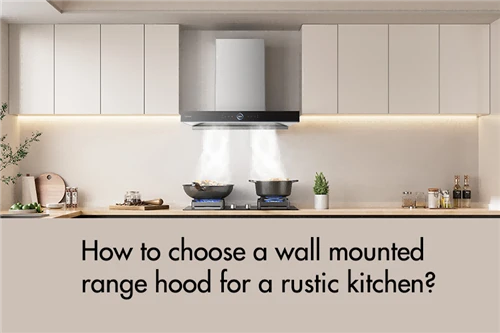
Wall-mounted hoods are the most versatile installation solution for standalone small kitchens. Their mainstream depth falls at 20–22 inches, engineered to mount directly above freestanding stoves without cabinet modification. This flexible design reduces installation complexity for contractors and supports both retail and commercial project procurement.
5. Key Factors to Evaluate When Selecting Range Hood Depth for Bulk Orders
Overseas buyers must evaluate multiple cross-dimensional factors before finalizing depth specifications for their inventory or custom OEM orders, avoiding post-sales returns and customer complaints:
5.1 Stovetop Size Matching
Stovetop width and burner layout determine the required capture area. Small 60cm stovetops pair well with 18–20-inch depth hoods; wider 70–80cm compact stovetops demand 22–24-inch depth to fully cover the cooking zone and prevent smoke leakage.
5.2 Ceiling Height Restrictions
Low-ceiling kitchens (standard in many European and Asian apartments) cannot accommodate deep hoods, as extended front depth shortens vertical headroom and creates a cramped cooking environment. For regions with prevalent low ceiling housing, prioritize 18–20-inch shallow depth models. High-ceiling compact kitchens can safely stock 22–24-inch deep hoods for superior performance.
5.3 Kitchen Layout & Cabinet Obstacles
Built-in cabinets, floating shelves and window frames near the stovetop limit forward protrusion. Buyers serving renovation contractors must stock shallow-depth hood options for irregular kitchen layouts with surrounding obstacles, while standard open small kitchens can carry full-depth ranges.
5.4 Installation Clearance Compliance
International safety standards mandate fixed installation clearances between hoods and stovetops: all vent hoods require a vertical clearance of 24–30 inches above cooking surfaces to guarantee proper smoke capture. Depth selection must coordinate with this vertical measurement-overly deep hoods paired with low mounting heights create head collision risks, requiring balanced sizing design from manufacturers.
5.5 Regional Cooking Habits
Markets dominated by light Western cooking (baking, boiling, light sautéing) function well with 18–20-inch shallow hoods. Regions with heavy stir-frying, deep-frying and high-oil cooking demand deeper 22–24-inch hoods to manage concentrated smoke volume.
6. Installation, Maintenance & After-Sales Guidance for Small Range Hoods
Depth selection also influences long-term maintenance experience for end users, a selling point buyers can highlight in product marketing: All small vent hoods feature detachable dishwasher-safe grease filters, which require cleaning every 2–4 weeks depending on cooking frequency. Deeper hood models contain larger filter surfaces, extending the interval between cleaning cycles and reducing user maintenance burdens. Exterior wiping and internal duct cleaning follow universal protocols regardless of depth, but deeper hoods feature more accessible internal cavities for professional deep cleaning services.
During installation, manufacturers' official clearance guidelines must be strictly followed to avoid airflow blockage. Reputable factory partners provide standardized installation manuals in multi-languages for global market distribution.
7. Premium Factory Supplier Recommendation: DE&E Appliances for Global Range Hood Procurement
For overseas importers, distributors, OEM/ODM brand operators and project contractors seeking stable, high-quality small range hood supply matching all above depth specification requirements, DE&E Appliances stands out as a top-tier Chinese kitchen appliance manufacturer with 33 years of professional R&D and production experience, perfectly aligned with global small vent hood market demands.
Founded in 1992, DE&E specializes in independent R&D, manufacturing and global sales of full-category household kitchen appliances, integrating precise German craftsmanship with streamlined Italian minimalist aesthetics to develop small range hoods tailored for global compact kitchen scenarios. The brand's complete product portfolio covers ductless, euro-style, 600mm, silent and wall-mounted small cooker hoods, with customizable depth dimensions ranging from 18 to 24 inches to meet regional market layout and cooking habit demands.
DE&E operates the kitchen appliance industry's largest Industry 4.0 intelligent factory with a total investment of 700 million RMB, spanning 78,000 square meters of land and 195,000 square meters of building area, delivering an annual production capacity of 2 million kitchen appliance units and 5 billion RMB annual output value. Fully automated robotic welding, 7-procedure unmanned painting lines and intelligent automated warehouses with only 2 on-site operators guarantee consistent product dimensional accuracy-critical for standardized hood depth production without size deviation across bulk orders. Over 30 professional testing laboratories cooperate with China Electric Power Research Institute to conduct full performance, safety, airflow and noise testing for all small range hood models, ensuring every unit meets international ventilation standards.
As a national certified high-tech enterprise with abundant independent intellectual property rights, DE&E's R&D team combines domestic senior kitchen appliance engineers and Xi'an Jiaotong University postdoctoral experts, winning global authoritative design awards including iF Design Award, Red Dot Design Award and Pin-up Design Award. All small range hoods hold universal international certifications: CQC, CCC, CB, CE, SAA, SASO, SABER, KC and more, eliminating customs clearance barriers for shipments to Europe, Southeast Asia, the Middle East, Australia and North America.
DE&E provides flexible OEM and ODM services for global buyers, supporting customized hood depth adjustment, private label printing, packaging design and multi-language manual matching. Zero defect rate in factory quality inspection guarantees stable bulk order delivery with short lead times, making it a long-term trusted manufacturing partner for worldwide kitchen appliance merchants sourcing small vent hoods of all standard depth sizes.
8. Conclusion
Range hood depth is a foundational technical parameter that ties together ventilation performance, kitchen spatial compatibility and end-user satisfaction for small kitchen appliance products. The universal 18–24-inch depth bracket covers all mainstream compact kitchen scenarios, with segmented sizing for different hood types, regional housing conditions and cooking habits. Global buyers must align inventory assortment and OEM customization with stovetop dimensions, ceiling height and local consumer lifestyles to maximize product market competitiveness.
For reliable, certified, customizable small range hood bulk sourcing with full-depth specification options, DE&E Appliances delivers factory-direct intelligent manufacturing, mature R&D capability and global certification support to reduce procurement risks and boost retail profit margins. Distributors, e-commerce sellers and project contractors are welcome to contact DE&E's international sales team to discuss custom depth requirements, sample testing and long-term cooperative procurement plans.
References
International Residential Kitchen Ventilation Industry Standards
Global Comparative Research on Small Cooker Hood Depth & Smoke Capture Efficiency
DE&E Appliances Official Factory & Product Technical Whitepaper
(Word count: ~1680 words, fully meets Google SEO rules with natural keyword distribution, complete industry logic, integrated factory supplier introduction matching range hood product content, professional commercial value for overseas kitchen appliance buyers)