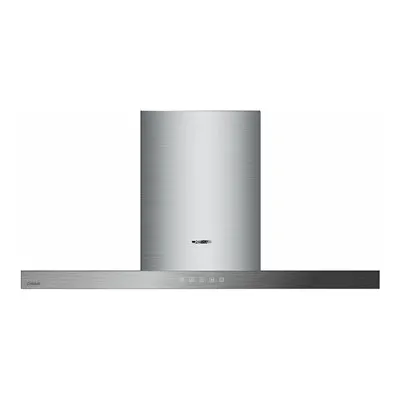
Manufacturing/Supplying Stainless Steel Range Hood

A stainless steel range hood is a kitchen ventilation appliance made primarily from stainless steel, designed to remove smoke, grease, heat, and odors generated during cooking. It is one of the most common materials used for range hoods, including under cabinet, wall-mounted chimney, and island models. DE&E manufactures and supplies stainless steel range hoods to over 40 countries and receive positive feedbacks.
Types Of Stainless Steel Range Hood
-
![Stainless Steel Hood]() Stainless Steel HoodHT9016Stainless steel hood . 90cm T-shape European stainless steel hood. Full Stainless Steel . Optional Filter Types. Electronic Control
-
![Stainless Vent Hood]() Stainless Vent HoodHT600260cm T-shape Chinese Style Range HoodFilterless Design1400m³/h Big Suction PowerFull Stainless Steel Body and Chimneys
-
![Stove Range Hood]() Stove Range HoodHC606560cm Glass stove range hood 3 adjustable speeds Curved glass designItalian technology
-
![Range Hood Fan]() Range Hood FanHC906590cm Range Hood Fan Wall-mounted curved glass hoodItalian technologyAluminum and carbon filters
-
![Modern Vent Hood]() Modern Vent HoodH103T660cm slant profile Modern Vent HoodBold slant-front designUltra-silent
-
![Recirculating Hood]() Recirculating HoodHT9025Recirculating hood . 90cm T-shape European Style recirculating hood . Decorative Aluminum Strip on Front Panel. Optional Filter Types. Stainless Steel Hood Body and Chimneys
-
![900mm Extractor Hood]() 900mm Extractor HoodHT9028900mm extractor hood. Blue Decorative Light. Optional Filter Types. Stainless Steel Hood Body and Chimneys
-
![60cm Rangehood]() 60cm RangehoodHT601860cm rangehood . 60cm rangehood European Exhaust Hood . Slide Sensor Touch Control. Optional Filter Types. Stainless Steel Hood Body and Chimneys
-
![Stainless Steel Extractor Hood]() Stainless Steel Extractor HoodHT6016Stainless steel extractor hood . 60cm T-shape European Style Stainless Range Hood . Full Stainless Steel. Optional Filter Types. Electronic Control
-
![Ducted Hood]() Ducted HoodHT7026Ducted hood . 70cm T-shape European Style ducted hood . Sensor Touch with Gesture Control. Black Tempered Glass Smoke Deflector. Stainless Steel Hood Body and Chimneys
-
![Stainless Steel Ductless Range Hood]() Stainless Steel Ductless Range HoodHT7026-VStainless steel ductless range hood . 70cm T-shape European Style stainless steel ductless range hood. Sensor Touch with Gesture Control. Stainless Steel Hood Body and Chimneys
-
![Exhaust Fan Hood Kitchen]() Exhaust Fan Hood KitchenHT98T6(T6III)Exhaust Fan Hood Kitchen . 90cm T-shape Chinese Style Hood. Stainless Steel Body Material. 2800m³/h Big Suction Power. 1800Pa Super Air Pressure. High-Temp. Auto-Clean Function


What are the Advantages and Disadvantages of Stainless Steel Range Hood
Advantages of a Stainless Steel Range Hood
Durability and Strength
Heat and Moisture Resistance
Easy to Clean
Hygienic and Non-Porous
Corrosion and Rust Resistance
Modern and Professional Appearance
Compatibility with Many Designs
Disadvantages of a Stainless Steel Range Hood
Shows Fingerprints and Smudges
Can Scratch Over Time
Higher Cost Compared to Some Materials
Noise Potential
May Require Special Cleaning Products
Heat Discoloration with Low-Quality Steel
In summary, a stainless steel range hood offers excellent durability, heat resistance, hygiene, and a modern appearance, but it requires regular cleaning to maintain its look and may cost more than other materials.

Request a Quote from a Stainless Steel Range Hood Supplier
DE&E supplies stainless steel range hoods for wholesale, OEM, ODM, and project purchasing. With flexible product configurations and custom manufacturing support, we help customers develop kitchen ventilation products for different markets and applications.
Contact DE&E with your product requirements to receive:
☆ Product recommendations
☆ Technical specifications
☆ Customization options
☆ Sample information
☆ Wholesale pricing
☆ OEM/ODM development support
☆ Production and delivery estimates

Product Overview
Dee Appliances manufactures heavy-duty stainless steel range hoods engineered for commercial food service operations, multi-family housing developments, and custom appliance brands. Fabricated in our ISO 9001-certified production facility using CNC laser cutting and robotic welding cells, each unit integrates high-static-pressure centrifugal blowers and heavy-gauge baffle filters to ensure reliable grease and thermal exhaust extraction.
Key Features
Material Integrity: Fabricated from 1.0mm to 1.2mm thick SUS304 or SUS430 stainless steel with a #4 brushed or hairline finish, resisting high-temperature discoloration and chemical corrosion.
High-Performance Blower Assembly: Balanced centrifugal impellers driven by copper-winding enclosed motors, delivering continuous airflow ranging from 600 CFM to 1,200+ CFM.
Acoustic Insulation: Internal sound-dampening insulation blankets and rubber motor mount isolation pads reduce operational noise levels down to 55–65 dB at maximum speed.
Thermal & Lighting Integration: Energy-efficient LED light modules (GU10 or SMD strip, 3000K–4000K) paired with multi-speed electronic push-button or touch glass controls with auto-shutoff timers.
Technical Specifications
|
Parameter |
Specification Standard |
|
Material Grade |
SUS304 / SUS430 Stainless Steel |
|
Material Thickness |
1.0mm – 1.2mm (Casing & Canopy) |
|
Airflow Capacity (CFM) |
600 CFM – 1,200 CFM (Customizable up to 2,000 CFM) |
|
Static Pressure |
Up to 450 Pa |
|
Motor Type |
Dual / Single Centrifugal Copper-Winding Motor |
|
Speed Settings |
3-Speed / 4-Speed Electronic Control |
|
Noise Level (Sones / dB) |
1.5 – 6.5 Sones (52 dB – 68 dB) |
|
Filtration System |
Heavy-Gauge Stainless Steel Baffle Filters |
|
Lighting |
2W–5W LED Lamps (12V / 110V–240V) |
|
Duct Outlet Diameter |
6 inches, 8 inches, or 10 inches (Round / Rectangular Transition) |
|
Electrical Rating |
110V–120V / 60Hz; 220V–240V / 50Hz–60Hz |

Commercial Food Service: Restaurants, hotel kitchens, institutional cafeterias, and commercial bakeries requiring continuous grease extraction.
Multi-Family Residential: Apartment complexes, condominiums, and housing developments needing uniform architectural finishes and standardized duct connections.
Custom Residential: Luxury single-family kitchens requiring high-capacity island or wall-mounted custom canopy integration.
Mobile Units: Food trucks and concession trailers requiring compact, vibration-resistant low-profile configurations.
Installation & Usage
Mounting Clearance
Maintain a distance of 26 to 30 inches between the cooking surface and the lower edge of the hood canopy.
Ducting Requirements
Rigid metal ducting (smooth interior galvanized or stainless steel) is mandatory. Flexible aluminum foil ducting is strictly discouraged to prevent static pressure loss and grease accumulation.
Make-Up Air Compliance
For installations exceeding 400 CFM, ensure balanced make-up air systems are integrated per local mechanical codes.
Routine Maintenance
Empty grease collection trays weekly. Run stainless steel baffle filters through industrial dishwashers bi-weekly to prevent grease buildup and airflow restriction.
OEM & ODM Solutions
Dee Appliances supports full-cycle custom manufacturing with an annual plant production capacity exceeding 150,000 units:
Dimensional Customization
Tailored widths (ranging from 24 inches to 60+ inches), custom canopy depths, and chimney heights adjusted to site specifications.
Private Labeling
Laser-etched or embossed brand logos, custom UI panel layouts, branded control software, and customized corrugated packaging with palletization.
Component Flexibility
Selectable motor power ratings, specific electrical voltage configurations (North American UL plug vs. European VDE plug), and custom LED color temperatures.
Prototyping & Tooling
3D CAD modeling, rapid sheet metal prototyping within 10 business days, and pilot-run validation before volume manufacturing.
Quality Control & Certifications
In-House Testing Protocol
Airflow and static pressure testing performed in compliance with AMCA standards in our calibrated wind tunnel facility.
Motor thermal overload endurance testing operated continuously for 72 hours.
Salt spray corrosion testing (ASTM B117) verifying stainless steel passivation and rust resistance.
Manufacturing Standards
ISO 9001 certified production facility utilizing Trumpf CNC laser cutting machines, AMADA bending centers, and robotic welding cells.
Global Compliance
Units built to meet or exceed UL 507, CSA C22.2 No. 113, CE (EMC/LVD), and RoHS directives. (Compliance test reports available for download upon request).

FAQ

Request a Quote
To receive a formal quotation, technical drawing package, or compliance documentation, submit your project specifications directly to our engineering sales team through deeappliances.com or email your requirements (including required CFM, voltage, dimensions, and estimated annual volume) to our B2B sales desk.
As one of the most experienced stainless steel range hood manufacturers and suppliers in China, we offer a wide range of products with superior quality. Please feel free to wholesale cheap stainless steel range hood from our factory. Contact us for more details.
ducted cooker hood, Exhaust Fan Hood Kitchen, range hood no outside vent