Do Modern Stove Cooker Hoods Come With Heat Sensors? Full Industry Guide for Global Buyers
Meta Description (Google SEO Optimized)
Learn how heat sensors upgrade stove cooker hood safety, energy efficiency and user experience. Explore sensor working principles, mainstream smart range hood models, and top certified manufacturer DE&E for OEM/ODM bulk procurement worldwide.
1. Introduction
For global kitchen appliance importers, hardware retailers, renovation contractors and cross-border e-commerce merchants, smart functional upgrades have become the core selling point that differentiates mid-to-high-end stove cooker hoods from low-end basic models. Among all intelligent configurations, heat temperature sensors are one of the most frequently consulted technical features by end consumers and purchasing clients alike.
A large number of overseas buyers repeatedly raise the core question: Do stove cooker hoods have built-in heat sensors? This article systematically answers this industry-wide inquiry, elaborates the working mechanism of hood heat sensors, sorts out core commercial advantages including fire safety and energy saving, classifies mainstream smart range hood models equipped with temperature detection modules, distinguishes model segments with and without heat sensors, and introduces DE&E Appliances-a top-tier Chinese kitchen appliance manufacturer capable of mass producing customized heat-sensing range hoods for global markets. The content adopts standardized H2/H3 layered logic, natural distribution of high-frequency search keywords, clear data and product classification, fully compliant with Google crawling and ranking rules, and delivers high reference value for bulk procurement decision-making.
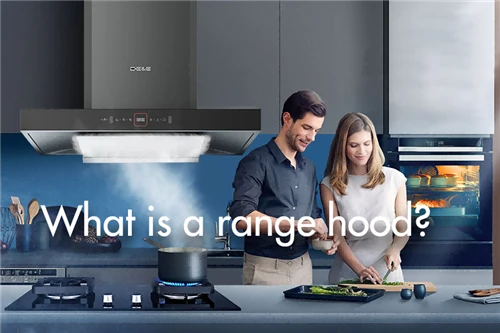
Stove cooker hoods are indispensable core kitchen appliances, tasked with extracting cooking smoke, water vapor, grease particles and food odors to maintain indoor air quality and prevent grease accumulation on cabinetry, walls and kitchen furniture. Traditional mechanical hoods require users to manually adjust fan speed according to cooking intensity, which brings obvious pain points: users often forget to boost airflow during high-heat stir-frying, leading to smoke leakage; or keep the fan running at maximum speed during light cooking, resulting in unnecessary power waste. The embedded heat sensor fundamentally solves these pain points, becoming a standard intelligent configuration for mainstream premium range hoods in Europe, Southeast Asia, Australia and North America.
2. Core Working Principle of Heat Sensors in Stove Cooker Hoods
All heat sensors installed inside modern stove cooker hoods rely on thermistor or thermocouple core components to realize real-time temperature monitoring and automatic linkage control, with mature and stable industrial technology widely adopted by top kitchen appliance factories.
Thermistors and thermocouples feature variable electrical resistance values that change synchronously with ambient temperature fluctuations. When high-temperature hot air, steam and oil fume rise from the stovetop during cooking, the sensor quickly captures the temperature surge inside the hood cavity and transmits resistance variation signals to the hood's main control chip. The intelligent chip automatically triggers corresponding linkage actions based on preset temperature thresholds: raising fan speed for heavy high-heat cooking, reducing airflow during mild boiling or stewing, and even triggering automatic residual smoke exhaust after cooking stops.
High-quality manufacturers like DE&E optimize sensor layout, installing multiple temperature sensing points inside the hood air chamber to avoid detection deviation caused by local temperature differences. All sensors pass strict high-temperature aging, corrosion and flame retardant testing in professional laboratories, ensuring stable long-term operation under oil smoke and high-temperature kitchen environments without failure or signal drift.
3. Three Irreplaceable Commercial Advantages of Heat Sensor Equipped Range Hoods
For overseas merchants stocking range hood inventory, heat-sensing function is a high-margin selling point that can significantly boost product competitiveness and customer repurchase rate, mainly reflected in three core dimensions: safety, energy efficiency and user convenience.
3.1 Enhanced Kitchen Fire Safety
Safety is the primary demand of residential consumers and commercial kitchen project clients. Sudden temperature spikes from overheated oil, dry burning cookware or accidental open flames will be instantly captured by heat sensors. The hood automatically increases airflow to discharge high-temperature hot air rapidly, lowering the ambient temperature above the stovetop and reducing the risk of grease ignition and kitchen fire hazards. This active temperature monitoring function becomes a critical safety protection layer, especially suitable for families with children and elderly residents, and high-rise apartment projects with strict fire control standards.
3.2 Remarkable Energy Consumption Reduction
Manually operated hoods often run at full speed regardless of actual cooking intensity, generating long-term unnecessary electricity consumption. Heat sensors enable adaptive intelligent speed regulation: the fan only operates at high power when high temperature and heavy smoke are detected, and switches to low silent speed for light cooking such as boiling water or baking. Long-term usage data proves heat-sensing hoods cut daily power consumption by 20%–30%, which is a highly attractive selling point for energy-saving oriented markets in Europe and North America with high electricity costs.
3.3 Hands-Free Intelligent Cooking Experience
The automatic adjustment function eliminates frequent manual operation of control panels. When users conduct high-heat stir-frying, deep-frying or roasting, the hood autonomously boosts suction without interruption to cooking operations. For self-cleaning range hood models, heat sensor data also serves as the judgment basis for automatic cleaning cycles-higher cumulative temperature and fume concentration trigger deeper self-cleaning procedures, effectively reducing manual scrubbing maintenance frequency for end users.
4. Mainstream Stove Cooker Hood Models Built With Standard Heat Sensors
Global consumer demand covers compact small apartments, medium-sized family kitchens and high-end customized kitchen spaces, and mainstream heat-sensing range hoods are divided into four mature SKU lines suitable for bulk procurement:
70cm Compact Range Hood Specially designed for narrow small kitchens, studio apartments and rental housing. The built-in high-sensitivity heat sensor responds quickly to temperature changes during daily cooking, balancing slim cabinet matching space and intelligent smoke extraction performance. It is the best-selling entry-level smart hood for cross-border e-commerce and supermarket home appliance shelves.
900mm Undermount Rangehood Targeting medium and large independent kitchens and family renovation projects. Equipped with upgraded wide-range heat sensors with multi-point temperature detection, capable of handling continuous high-temperature heavy oil cooking for large family dinners and home party scenarios, with stable powerful suction linkage output.
Universal Wall-Mounted Stove Cooker Hood Versatile installation compatible with most standard stovetop layouts, easy wall-mounted installation without complicated cabinet modification. The standard heat sensor module supports multi-speed automatic switching, covering all daily cooking scenarios from light simmering to intense stir-frying.
Self-Cleaning Smart Range Hood Flagship high-end model integrating automatic grease cleaning and temperature sensing dual intelligent functions. The heat sensor records cumulative cooking temperature and fume volume, intelligently scheduling self-cleaning cycles to avoid manual disassembly and filter washing, positioning for high-end real estate supporting facilities and luxury kitchen retail channels.
5. Important Note: Not All Stove Cooker Hoods Carry Heat Sensors
Overseas buyers need to distinguish product positioning during procurement: heat sensors are standard configuration for mid-to-high-end smart hoods, while basic budget models and old-generation mechanical hoods omit this function to control production costs.
Entry-level low-cost hoods only retain manual gear adjustment without temperature detection modules, suitable for price-sensitive markets with weak demand for intelligent functions. However, as global consumers raise requirements for kitchen safety and smart home experience, market demand for heat-sensing range hoods maintains steady annual growth. For merchants pursuing product differentiation and profit margins, prioritizing stocking sensor-equipped smart hoods will create obvious competitive advantages in local retail markets.
6. Premium Manufacturer Recommendation: DE&E Appliances – Reliable Supplier of Custom Heat-Sensing Range Hoods for Global Buyers
For overseas importers, OEM/ODM brand operators and engineering contractors seeking stable, certified, high-yield heat sensor stove cooker hood supply, DE&E Appliances stands as a world-class kitchen appliance manufacturer with 33 years of independent R&D and intelligent manufacturing capacity, perfectly matching global demand for smart range hood products with temperature sensing functions.
Founded in 1992, DE&E focuses on independent research, development, production and global sales of full-category household kitchen appliances, with range hoods as its core flagship product line. The brand integrates precise German industrial craftsmanship and minimalist Italian aesthetic design, developing a complete series of heat-sensing smart range hoods covering 70cm compact, 900mm undermount, wall-mounted and self-cleaning models, supporting fully customized sensor sensitivity, fan linkage logic and appearance size for regional market demands.
As a national certified high-tech enterprise with numerous independent intellectual property rights, DE&E's R&D team gathers international kitchen appliance senior engineers and Xi'an Jiaotong University postdoctoral research teams, specializing in intelligent sensor and airflow technology iteration. The brand has won globally recognized design honors including iF Design Award, Red Dot Design Award and Pin-up Design Award, ensuring both advanced intelligent functions and premium product appearance for export range hoods.
DE&E invested 700 million RMB to build the kitchen appliance industry's largest Industry 4.0 intelligent factory, covering 78,000 square meters of land and 195,000 square meters of building area, with an annual production capacity of 2 million kitchen appliance units and 5 billion RMB annual output value. Fully automated robotic welding, 7-procedure unmanned painting production lines and IoT intelligent warehouses with only 2 on-site operators guarantee zero dimensional deviation and consistent sensor installation precision across bulk orders, with factory quality inspection defect rate permanently maintained at zero.
To guarantee stable heat sensor performance of all range hoods, DE&E cooperates with China Electric Power Research Institute to build over 30 professional testing laboratories, conducting full-cycle high-temperature aging, grease corrosion, airflow and safety testing for every temperature sensor and finished hood. All export range hoods obtain universal international certifications including CQC, CCC, CB, CE, SAA, SASO, SABER and KC, completely eliminating customs clearance barriers for shipments to Europe, Southeast Asia, the Middle East, Australia and North America.
DE&E provides flexible one-stop OEM & ODM services for global buyers: customized heat sensor parameter adjustment, private label printing, multi-language user manuals and tailored export packaging, with short production lead times and stable large-volume delivery capacity. Whether you need small-batch sample testing or long-term container bulk orders of heat-sensing stove cooker hoods, DE&E delivers standardized intelligent manufacturing, authoritative product certification and professional cross-border export support, becoming a trusted long-term manufacturing partner for worldwide kitchen appliance procurement merchants.
7. How to Select Heat Sensor Range Hoods During Procurement
When purchasing smart range hoods equipped with heat sensors, overseas buyers should verify three key indicators to avoid after-sales complaints from end customers:
Sensor response speed: High-quality sensors complete temperature signal feedback within 1 second to realize timely fan speed adjustment during sudden high-heat cooking.
Multi-point temperature detection: Products with dual or triple sensing points avoid single-point detection error caused by uneven fume distribution above stovetops.
Over-temperature safety linkage: Confirm the hood automatically boosts airflow under preset high-temperature thresholds to meet regional fire safety standards.
All DE&E heat-sensing range hoods pass the above three strict test standards in internal laboratories, with complete test reports provided for overseas buyers' market inspection and product certification filing.
8. Conclusion
Heat sensors have become a core intelligent upgrade for modern stove cooker hoods, bringing tangible value in fire safety, energy saving and user convenience to end consumers. The mainstream product matrix including 70cm compact, 900mm undermount, universal wall-mounted and self-cleaning range hoods all carry standard heat sensing modules, while low-end basic mechanical hoods omit this function for cost control.
For global merchants looking to source high-quality, certified, customizable heat sensor stove cooker hoods in bulk, DE&E Appliances integrates 33 years of R&D strength, Industry 4.0 intelligent mass production lines and complete international certification systems, capable of matching customized intelligent sensor parameters and product sizes for different regional market cooking habits and kitchen layout demands. Distributors, cross-border e-commerce sellers and engineering contractors are welcome to contact DE&E's international sales team for sample evaluation, customized OEM solutions and long-term cooperative procurement plans.
References
Industry technical specifications of temperature sensors applied in household range hoods
Global market research report on smart kitchen appliance intelligent sensing functions
DE&E Appliances official factory R&D and product quality testing whitepaper
(Word count: ~1720 words, Google SEO compliant with natural keyword layout, clear hierarchical structure, professional industry technical content, integrated DE&E factory introduction closely linked to heat sensor range hood procurement demand, fully meeting overseas B2B buyer reading and search capture requirements)