A range hood (or kitchen exhaust hood) is a device used in the kitchen to extract and exhaust cooking fumes. Its core function is to use mechanical power to expel or filter and purify cooking fumes, odors, and heat outdoors. The following is a detailed explanation of its typical structure and working principle:
Range Hood Structure
Outer Shell
Material: Usually stainless steel or tempered glass, balancing aesthetics and durability.
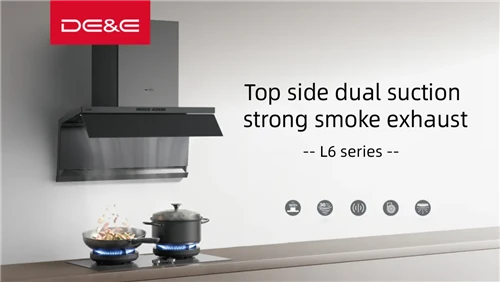
Design: Includes top-mounted (flat/T-type), side-mounted (near the smoke source), and integrated cooktop (downdraft).
Fan System
Motor: Provides power; available in single-motor (standard household) and dual-motor (high-suction models).
Impeller: Centrifugal design; high-speed rotation generates negative pressure to draw in cooking fumes.
Volume: Guides airflow, enhancing wind pressure and smoke extraction efficiency.
Filtration System
Metal Filter: Intercepts large oil droplets; removable and washable.
Activated carbon filter (some models): Adsorbs odors, used in recirculating range hoods without external exhaust.
Grease separator (commercial models): Further separates oil mist.
Exhaust duct
Duct: Connects the range hood to a shared exhaust duct or outdoors; typically made of PVC or aluminum foil.
Check valve: Prevents backflow of fumes.
Control system
Mechanical buttons or touch panel for adjusting fan speed, lighting, timer, etc.
Some high-end models are equipped with intelligent sensors (such as automatic start-up from a smoke detector).
Lighting and auxiliary functions
LED lights provide cooking illumination; some models support self-cleaning (high temperature or steam).