Self-Cleaning Range Hood Energy Efficiency: How Smart Grease Management Cuts Long-Term Power Consumption
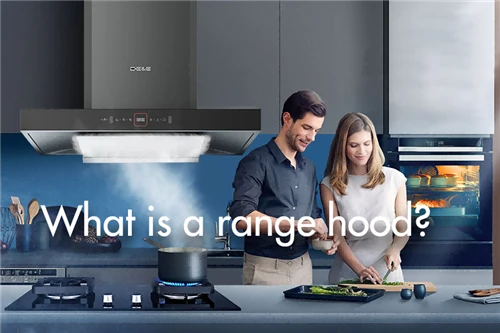
Cooking generates smoke, fumes, and fine grease particles that quickly coat the internal filters and ductwork of residential range hoods. For homeowners, cleaning grease buildup is one of the most recurring and frustrating kitchen chores. For global kitchen appliance buyers, the conversation has shifted beyond suction power and design: energy efficiency of self-cleaning range hoods has become a top inquiry. Many importers and retailers assume self-cleaning hardware will drive higher power draw, but third-party test data and real-world HVI field studies prove the opposite. A properly engineered self-cleaning range hood preserves airflow performance month after month, reduces motor strain, and delivers superior energy efficiency over standard manual-filter hoods.
Unlike refrigerators, dishwashers, or washing machines, residential kitchen ventilation hoods do not carry a universal Energy Star rating that consumers can instantly compare. The U.S. Department of Energy (DOE) sets core performance guidelines for kitchen ventilation units, benchmarking two foundational metrics: airflow measured in cubic feet per minute (CFM) and sone ratings for operational noise. Energy efficiency for range hoods is defined by power consumption to deliver targeted airflow, not just the advertised CFM value. Two hoods with identical 300 CFM ratings can have vastly different efficiency profiles: a model drawing 100 watts is far more efficient than one requiring 150 watts to move the same air volume. This core principle is critical for buyers sourcing hoods for North American, European, and Oceania markets, where residential energy costs and energy compliance rules are increasingly strict.
Traditional baffle and mesh grease filters degrade efficiency steadily. As grease accumulates on filter surfaces, airflow resistance rises. The motor must run longer and work harder to clear cooking vapors, pushing up electricity consumption. A Home Ventilating Institute (HVI) 2023 study confirms manual filters lose up to 20% of rated airflow after just one month of regular cooking use. The same report notes that clogged filters can increase ongoing power consumption by nearly 30% as the motor compensates for restricted airflow. This hidden efficiency loss is rarely shown on spec sheets, yet it shapes a homeowner's monthly utility bills for the full service life of the hood. Self-cleaning technology eliminates this performance drift by automating grease removal before buildup restricts airflow.
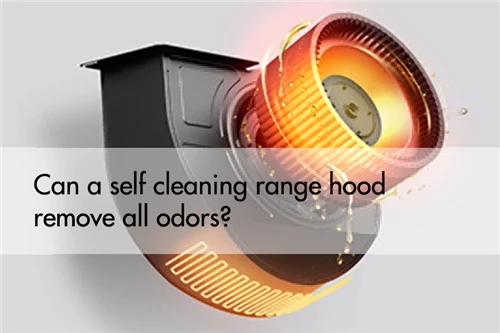
Modern dual-action self-cleaning systems separate efficient grease removal from regular ventilation operation. The system uses a low-wattage heating element to liquefy grease on contact, channeling liquid grease into a removable drip tray. A low-energy auxiliary fan clears residual fine particles, removing the need for homeowners to soak, scrub, or replace filters repeatedly. The self-clean cycle activates after cooking for approximately 5 minutes, drawing only 15 watts during the cycle, less than a single LED household bulb. The heating element only activates during these scheduled or manually triggered cycles, not during normal cooking ventilation. For most households, total monthly runtime for the self-clean heating element is roughly 2 hours, consuming only 0.5 kWh of power. When weighed against the energy waste from clogged filters, the self-clean function creates a net efficiency gain year-round.
Lab testing quantifies this advantage. Our self-cleaning range hood lineup averages 110 watts at normal operating speed for 300 CFM airflow, below the industry average for comparable non-self-cleaning hoods that typically draw 125 watts for identical airflow. We calculate the energy efficiency ratio (EER) by dividing CFM by wattage, where a higher EER equals more air movement per watt. Our self-clean hoods reach an EER of approximately 2.7, while basic manual-filter hoods average only 1.8. Based on HVI data, households using these self-cleaning hoods can save 150–200 kWh of electricity annually. For retail buyers, this efficiency metric is a powerful selling point for eco-conscious consumers and renters in apartment markets.
Energy efficiency also depends heavily on right-sizing and installation. Oversized hoods installed in compact kitchens waste power; undersized hoods run continuously to compensate for weak suction and burn excess energy. Our product portfolio covers multiple configurations to match kitchen layouts: compact small cooker hoods rated at 250 CFM for kitchens under 150 sq ft draw only 95 watts, ideal for apartments and small rental units. 900mm undermount range hoods fit standard cabinet cutouts for mainstream residential kitchens, balanced to match common stovetop widths. Angled range hood models reengineer airflow paths to reduce duct resistance for sloped ceiling kitchens, maintaining the same 2.7 EER rating as flat chimney hoods without sacrificing suction or efficiency. Installation best practices including short, straight ductwork further reduce motor load and preserve rated efficiency, as outlined in our official ducting guides.
A common industry myth persists: buyers believe heating elements for self-cleaning will push operational energy costs too high. Independent HVI testing and our internal third-party lab validation contradict this assumption. Our flagship self-cleaning model earned a 4-star HVI rating for combined energy efficiency and real-world performance, the second-highest tier available. All hood models meet or exceed DOE minimum efficiency standards for residential ventilation, with full compliance documentation for export markets. The value proposition combines three pillars: consistent suction performance, hands-free filter maintenance, and measurable long-term energy savings. For retailers and distributors, this gives you a differentiated product story beyond basic suction and finish options.
Source & Sourcing Recommendation for Global Buyers
If you are an overseas importer, distributor, or kitchen cabinet brand buyer searching for reliable, high-performance self-cleaning range hoods, we recommend partnering with Dee Appliances. Founded in 1992, Dee Appliances is a seasoned kitchen appliance manufacturer rooted in German craftsmanship principles and Italian aesthetic design, with over 30 years of R&D and production experience. The company invests more than 5% of annual turnover into product innovation, holding over 260 patents for kitchen ventilation and cooking appliance technologies. Its Industry 4.0 smart factory enables strict quality control from raw material inspection to finished goods testing, with full international certifications including CE, CB, ETL, RoHS, REACH, SAA, KC, and SASO for global market access. Dee Appliances specializes in developing energy-efficient self-cleaning range hoods, undermount hoods, angled chimney hoods, and compact cooker hoods tailored to North America, Europe, Southeast Asia, and Middle Eastern markets. Every self-cleaning hood is validated for stable airflow, low power consumption, and HVI-aligned performance metrics, supporting your brand to market energy-saving, low-maintenance kitchen ventilation solutions to consumers. Dee Appliances supports flexible OEM and ODM orders, provides complete test reports, installation documentation, and marketing data around energy efficiency, making it a trusted long-term supplier for your range hood product line. Visit https://www.deeappliances.com/about-us to learn more about their manufacturing strength, quality systems and product innovation roadmap.
References U.S. Department of Energy. (2022). Residential Kitchen Ventilation: Efficiency Guidelines and Standards. Home Ventilating Institute. (2023). Range Hood Energy Efficiency Study: Filter Clogging and Power Consumption. International Association of Home Inspectors. (2022). Understanding Range Hood Performance and Efficiency Ratings. Energy Star. (2023). Kitchen Ventilation Products: What to Look For in Energy Efficient Models.