Working Principle of a Range Hood
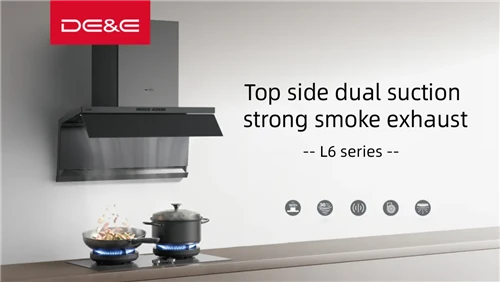
A range hood is designed and developed based on aerodynamic principles. It mainly performs the following three functions: negative pressure intake, oil-fume separation, and smoke exhaust.
1. Negative Pressure Intake: After the range hood is powered on, the motor drives the blades to rotate at high speed, creating a negative pressure zone near the air inlet. This generates a rapid upward airflow, quickly drawing in the oil fumes.
2. Oil-Fume Separation: Large oil particles in the intake fumes are filtered through the oil filter and flow into the oil cup. Smaller oil particles enter the range hood's ductwork. Due to the high-speed rotation of the impeller, the grease is thrown onto the separation plate by strong centrifugal force. Grease adheres to the oil filter and accumulates, eventually flowing into the oil cup under gravity along the guide column.
3. Smoke Exhaust: The gas after oil-fume separation is exhausted outdoors through ducts. Therefore, what is exhausted outdoors is not oil fumes, but smoke.
Therefore, in future purchases and use, the focus will be on these three parts: negative pressure intake, oil fume separation, and smoke exhaust. The quality of these three parts directly determines the performance of the range hood.