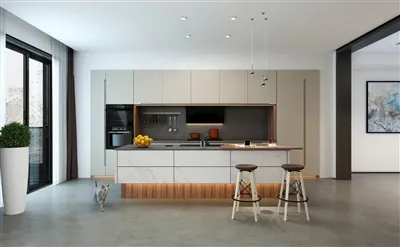
Air Volume: Air volume refers to the maximum airflow a range hood can produce when running at its highest setting and with an unobstructed exhaust vent. Air volume is a crucial factor when choosing a range hood; the higher the air volume, the lower the negative pressure at the smoke inlet, and the stronger the suction of surrounding fumes. Families who frequently stir-fry or have open kitchens need a higher air volume.
Static Pressure: This refers to the static pressure value within the range hood's duct when the air volume is 7 m³/min. 7 m³/min is the minimum air volume standard that a range hood must meet according to national standards. Static pressure can be understood as the internal working pressure of the range hood. If the exhaust pipe is long or connected to a shared exhaust duct, the exhaust pressure loss is significant, requiring higher static pressure to ensure the fumes are expelled. With other indicators being good, a higher static pressure value is better.
Oil-Fume Separation: Grease separation degree refers to the degree of separation between grease and combustion gases. The higher the value, the better the effect; the national standard is 80%. Good quality range hoods on the market have a grease separation rate of over 90%. If the exhaust air contains a lot of grease, the fumes will become dirty faster, and the airflow will decrease. When purchasing, pay attention to models with low grease separation rates.
Noise: Higher wind pressure and airflow will result in higher noise levels. National regulations stipulate that the noise level of a range hood should be ≤ 74 dB(A). It is recommended to choose a range hood with a noise level below 50-60 dB.